
Installing a home EV charger on the Isle of Man typically means a 7kW wall unit fitted by a qualified electrician, with supply-and-install costs landing around £800–£1,500 depending on your cable run and whether your fuse board or earthing needs upgrading first. The single most important thing to know is what the UK pages won't tell you: the UK Government's £350 chargepoint grant does not apply here. UK guidance states plainly that your property must be in the UK and that you cannot claim if you live in the Isle of Man. So budget for the full install with no UK grant, use a registered electrician working to the wiring regulations, and check the Isle of Man Department of Infrastructure for any current local incentive rather than assuming one exists. This guide covers the real cost, the grant trap, who's allowed to do the work, and the checks to make before you book.
How much does it cost to install an EV charger?
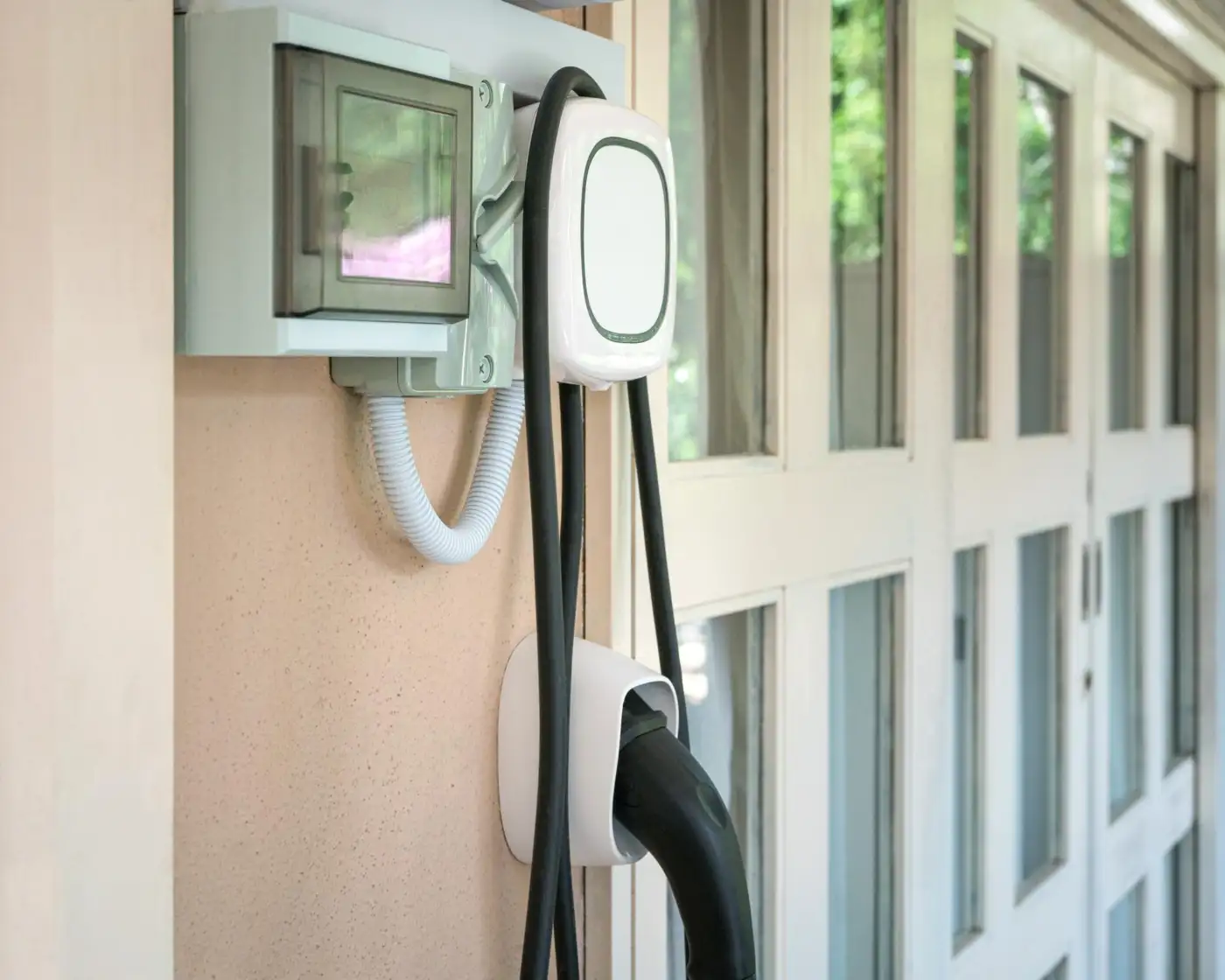
A standard home charger is a 7kW unit — fast enough to fully charge most electric cars overnight — and the job is the unit plus the labour to wire it safely from your consumer unit (the fuse board) to the wall where the car parks. As an indicative figure, a typical supply-and-install runs around £800–£1,500. That's a range, not a quote: where you land inside it depends on a few real things.
The biggest cost drivers are the length and difficulty of the cable run from the fuse board to the parking spot, and whether your existing electrics can take the load as they are. A short, simple run to a board with spare capacity sits at the lower end. A long run, a tricky route through walls or under a drive, or a consumer-unit or earthing upgrade needed before the charger can go in, all push it up.
The Isle of Man has no separate published install tariff, so local pricing broadly tracks these figures — give or take. For an exact number, the only honest answer is to get a quote for your specific property, because the variables above decide it.
Can you get the UK EV chargepoint grant on the Isle of Man?
No — and this is the correction that matters most, because nearly every UK guide tells readers to claim it. The UK runs an Electric Vehicle Chargepoint Grant worth up to £350 towards a home charger, but it is a UK scheme with UK eligibility. The official guidance is unambiguous: "Your property must be in the UK. You cannot apply for this grant if you live in the Channel Islands or Isle of Man." You can read the rules on the UK chargepoint grant eligibility page and the wider chargepoint grants guidance.
The reason is the same one that runs through everything else on the Island: the Isle of Man is a separate jurisdiction, not part of the UK. It has its own government and its own schemes, which means UK incentives stop at the water — and you should budget for the full installed cost with no UK contribution towards it.
What about a local equivalent? We won't tell you one exists, because incentives change and we'd rather you check the source than take our word for a figure. If you want to know whether any island scheme applies when you install, the place to look is the Isle of Man Department of Infrastructure on gov.im. Treat any UK page promising you £350 off as written for someone living somewhere else.
Can any electrician install an EV charger — or can I do it myself?
This is firmly a call-a-pro job, not a weekend project. An EV charger must be installed by a competent, qualified electrician — ideally a registered installer — working to BS 7671, the wiring regulations that govern fixed electrical installations. It is not DIY, and not a job for a general handyman. A charger draws a sustained heavy load for hours at a time, on a dedicated circuit with its own protection, and getting the earthing arrangement wrong is exactly the kind of mistake that turns dangerous quietly, over months.
There's a specific technical reason EV chargers need an electrician who knows them, not just any sparky: the protective earthing has to be designed for a vehicle that someone can touch while it's charging outdoors, which means the installer has to assess and, where needed, add the right protection. That's a deliberate part of doing it to standard — and it's why the unit can't simply be wired in like an extra socket.
If you want to check an installer's competence before you book, two independent sources are worth knowing. You can verify a registered electrician through NICEIC, and read plain-English consumer guidance on choosing one from Electrical Safety First. The principle holds whoever you use: regulated electrical work needs a qualified, accountable person — and on an island where good trades can be hard to pin down, that accountability is the whole point.
What do you need to check before installing one at home?
Before anyone quotes you, a few things decide whether the job is straightforward or needs work first — and on the Isle of Man, with its older housing stock, the "first" part comes up more often than it does on newer mainland estates. A short walk round with these in mind will tell you a lot.
The honest list of pre-install checks is short:
- Off-street parking within reach of a wall — a charger needs somewhere the car reliably sits.
- Supply capacity — whether your main fuse rating can carry a 7kW charger on top of everything else in the house.
- Consumer unit and earthing — an older fuse board or earthing arrangement may need upgrading before a charger can be added safely.
- Cable route — a clear, sensible path from the board to the parking spot keeps the cost down.
The one that catches people out is the earthing and consumer-unit check. Older island properties — a stone cottage, a pre-war terrace — are more likely to have an aged fuse board or an earthing setup that needs bringing up to standard before a charger goes in. That's not a reason to put the job off; it's a reason to have it assessed properly, because the upgrade is the same work that makes the rest of your electrics safer. If a supply or board upgrade is on the cards, it's worth understanding the wider context in our guide to house rewire cost on the Isle of Man, which covers consumer units and supply work in detail.
A good installer does all of this assessment as part of quoting, so you're not guessing. You can see the full range of work our team handles on our electrical and property services page, and read more about Fenshaw and how we vet our trades.
The short version: plan for the full installed cost — roughly £800–£1,500 for a 7kW unit — assume no UK grant, use a qualified electrician, and get your supply and earthing checked first. Get those four right and a home charger is one of the most useful upgrades you can make; the only real trap is following UK advice on an island where half of it doesn't apply.
Frequently asked questions
How much does it cost to have an EV charger installed? A typical 7kW home charger supplied and installed runs around £800–£1,500. Where you land depends on the cable run from your fuse board to the parking spot and whether your consumer unit or earthing needs upgrading first. There's no separate Isle of Man tariff, so local prices broadly track these figures — get a quote for your property.
Can a normal electrician install an EV charger? It must be done by a competent, qualified electrician working to BS 7671 — ideally a registered installer — not a general handyman. EV chargers need specific earthing and protection because the car is charged outdoors and can be touched while live, so use an electrician familiar with EV work and check their registration via NICEIC.
Can you install an EV home charger yourself? No. This is not a DIY job. An EV charger is a heavy, sustained load on a dedicated, protected circuit, and the earthing arrangement has to be designed correctly for safety. Getting it wrong is dangerous and would not meet the wiring regulations. Always use a qualified, registered electrician.
Is there an EV charger grant on the Isle of Man? The UK Government's chargepoint grant does not apply — its rules state you cannot claim if you live in the Isle of Man. Budget for the full installed cost with no UK contribution. For any island-specific incentive, check the current position with the Isle of Man Department of Infrastructure on gov.im rather than assuming one exists.