
Most dripping taps come down to one worn part. A drip from the spout is usually a perished washer on a traditional compression tap, or a worn ceramic disc cartridge on a modern quarter-turn or lever tap; a leak from the base or handle is normally a worn O-ring. It's often a job you can do yourself: turn the water off at the small isolation valve on the pipe under the sink (or the main stopcock if there isn't one), take the tap apart, and swap the worn part like-for-like. The catch is that cartridges aren't universal — match the old one by diameter, length and spline count, or the new part will leak or won't fit. Call a plumber if there's no isolation valve and you can't reach the stopcock, if a fitting is seized solid, or if the leak is coming from the pipework rather than the tap itself.
Why is my tap dripping?
The type of tap tells you what's worn. Traditional taps — the kind you turn several times to open, with a rubber washer inside — drip from the spout when that washer hardens or splits and can no longer seal against its seat (Wickes). Modern taps — quarter-turn or single-lever mixers that go from off to full flow in a short movement — don't use a washer at all; they use a ceramic disc cartridge, two polished discs that slide across each other, and a drip means that cartridge is worn or scaled (Screwfix).
Where the water appears matters as much as the tap type. A drip from the spout points to the washer or cartridge — the part that shuts off the flow. Water seeping from the base of the spout or around the handle usually means a perished O-ring, the small rubber seal where two parts of the tap body meet (Tap Warehouse). Working out which of the three it is before you buy a part saves a second trip to the merchant.
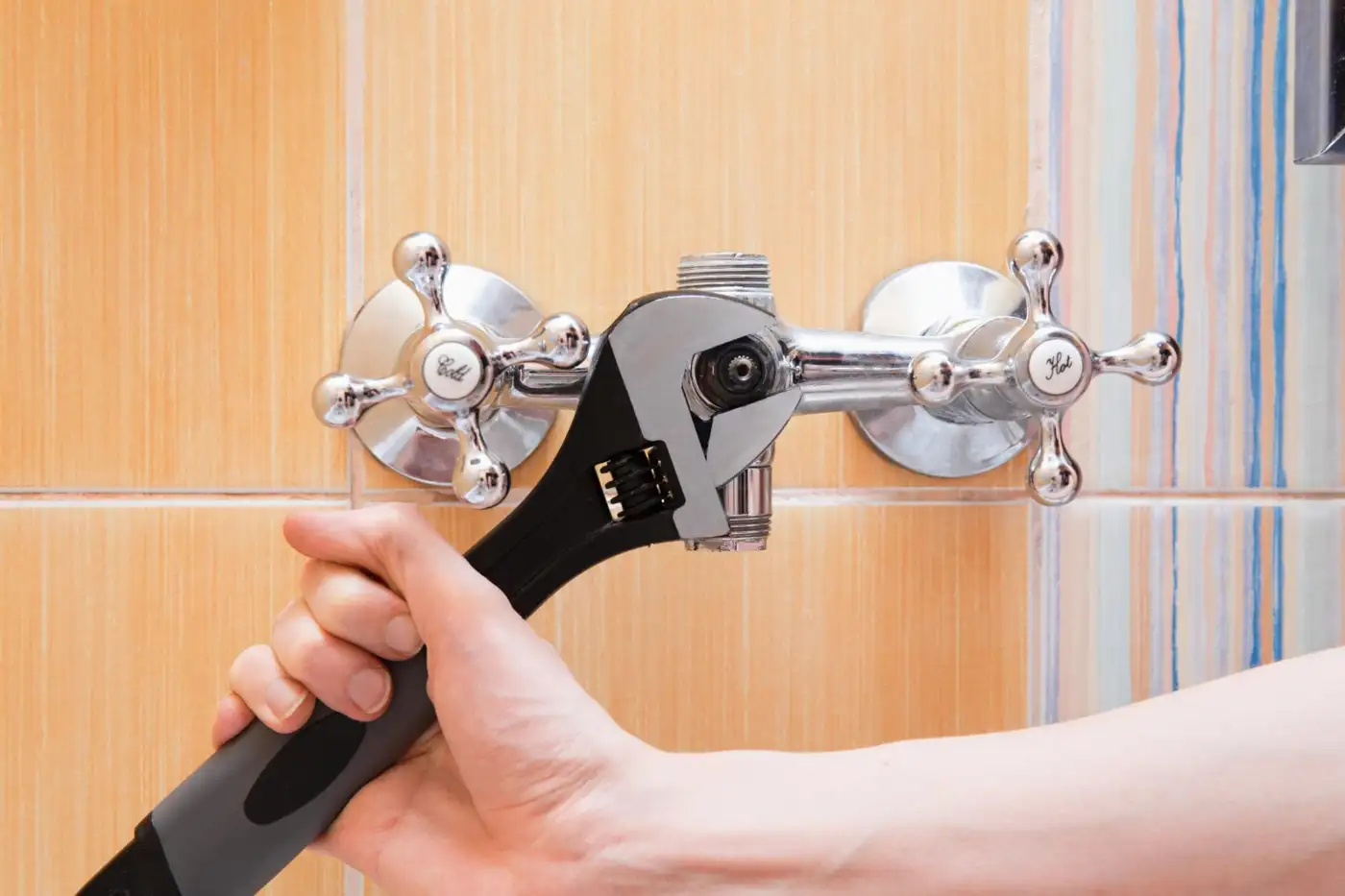
How to fix a dripping tap, step by step
The method is the same whether you're replacing a washer, a cartridge or an O-ring — only the part you swap changes. Work slowly, keep the parts in the order they come off, and don't force anything.
- Turn off the water. Look under the sink for a small isolation valve on the supply pipe — a slotted screw set into an inline fitting. Turn the slot a quarter-turn so it sits across the pipe to close it. If there's no isolation valve, close the main stopcock, usually under the kitchen sink or where the mains enters the house (Wickes).
- Open the tap to release any water left in the pipe and confirm the supply is off. Put the plug in — or cover the plughole with a cloth — so no small screws or parts disappear down the drain.
- Remove the handle. Prise off the hot/cold indicator cap on top, undo the screw underneath, and lift the handle away. Protect the finish with a cloth wherever you need to grip metal with a spanner.
- Undo the headgear or retaining nut with a spanner to reach the working parts. On a compression tap you'll find the washer at the bottom of the headgear; on a modern tap you'll lift out the ceramic cartridge (Screwfix). Hold the tap body steady so you aren't twisting the pipework below it.
- Replace the worn part like-for-like — the washer, the cartridge, or the O-ring around the spout. A smear of silicone grease on the thread helps it seat and come apart cleanly next time.
- Reassemble in reverse, then turn the water back on slowly at the isolation valve and watch for drips as the pressure returns. Run the tap to clear any trapped air.
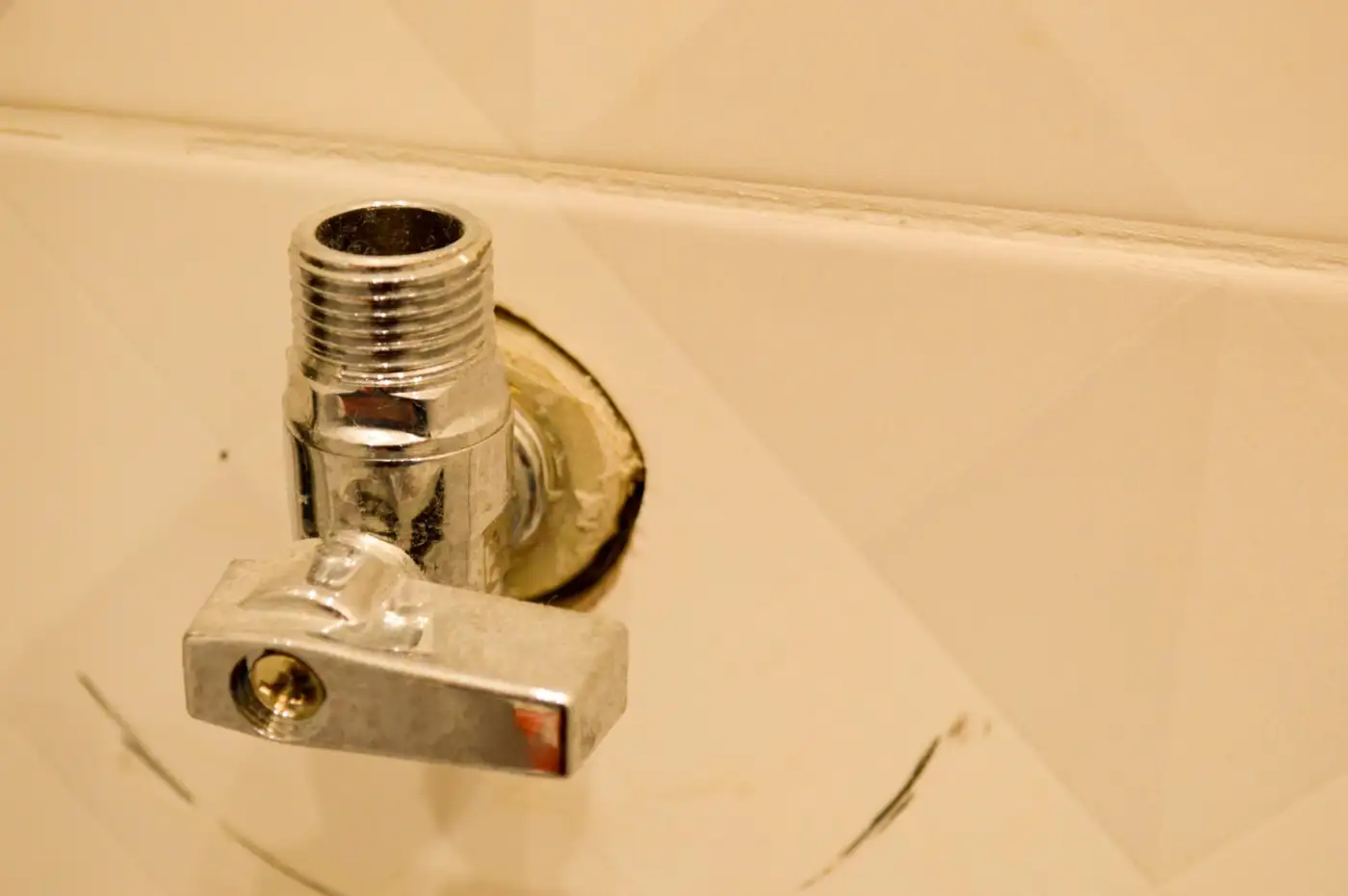
If you get the headgear off and the fitting underneath is corroded solid, or the cartridge turns out to be a shape you can't match, that's the point to hand it over rather than risk the pipe.
How do you match the right cartridge or washer?
Washers and O-rings are close to universal and cheap — most washers come in a couple of standard sizes, and a mixed pack from any merchant will usually hold the one you need. Ceramic cartridges are not. They vary by diameter, overall length, and spline count — the number of teeth on the splined stem that the handle grips — and a cartridge that's a few millimetres out, or has the wrong spline count, won't seal or won't take the handle (Screwfix).
The reliable way to buy the right one is to take the old part with you and match it against the replacement, rather than guessing from the tap's brand name (Tap Warehouse). That's also why it pays to isolate just the one tap and leave the rest of the house running while you go and source the part.
Here's the Isle of Man wrinkle. Local merchants can't stock every cartridge for every mixer, so a like-for-like part often has to come across on the ferry — typically a couple of days' wait. On an older tap, or a discontinued mixer, that can tip the sums: sometimes a whole new tap costs less than chasing a specific cartridge across the water, and you aren't left without a working sink while you wait. Isolating that tap and living without it for a day or two is the trade-off.
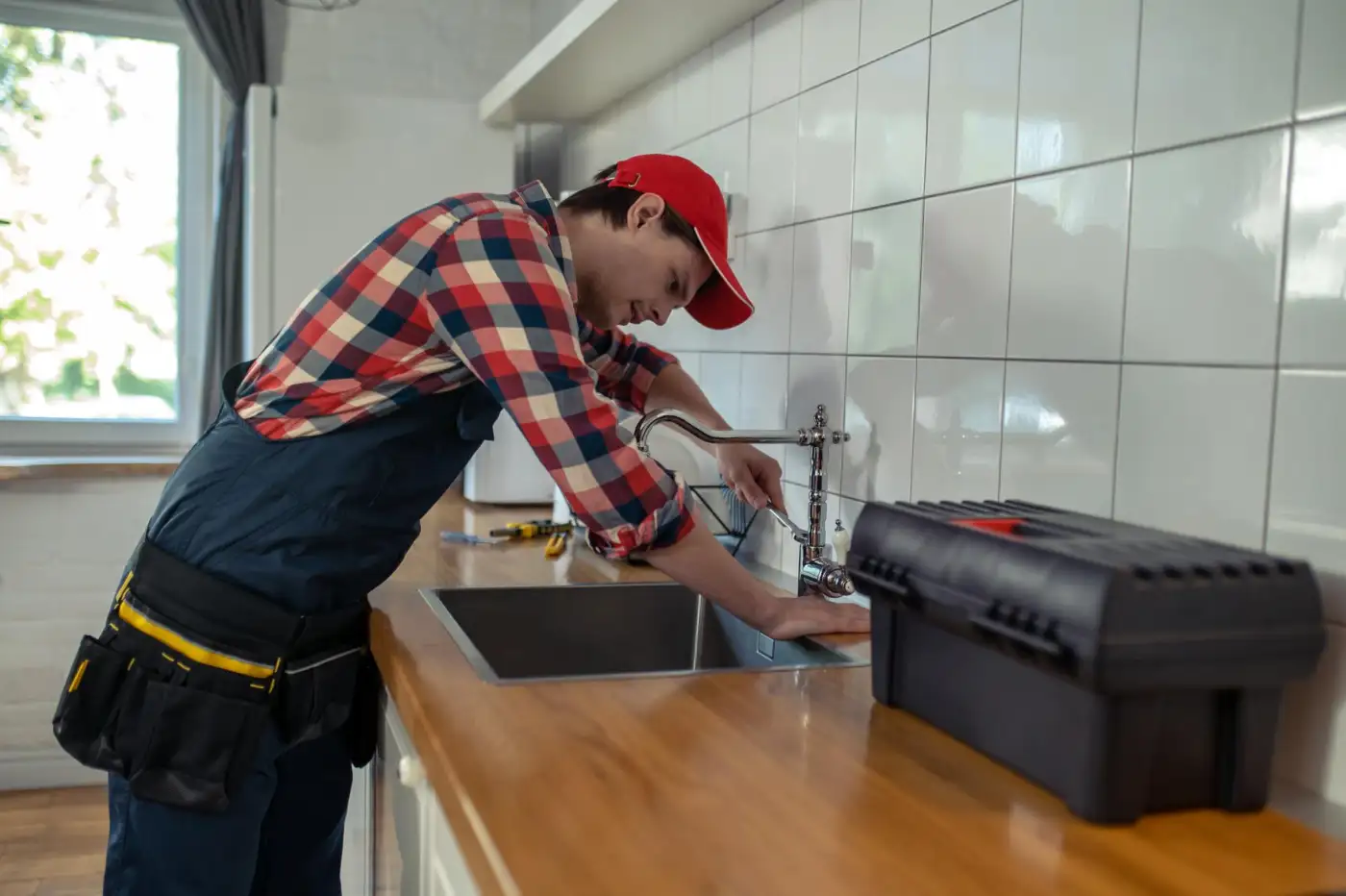
If you'd rather not gamble on a ferry order for a cartridge that might not fit, a quick call can often tell you whether it's a simple swap or a case for a new tap.
When should you call a plumber instead?
A washer or cartridge swap is genuine DIY. A handful of situations, though, are where a five-minute job turns into a burst pipe — and where calling someone is the cheaper decision:
- There's no isolation valve and you can't find or turn the stopcock. Never take a tap apart while it's still under mains pressure. If you can't isolate the supply, stop there.
- A fitting is seized or corroded solid. On older Island plumbing, headgear and back-nuts can weld themselves in place. Forcing a spanner risks snapping the pipe or cracking the tap body, which turns a drip into a flood — and a far bigger bill.
- The cartridge is proprietary. Some designer or monobloc mixers take a cartridge only the manufacturer supplies, and getting it wrong twice costs more than a plumber getting it right once.
- The leak is coming from the body or the pipework, not the tap workings. A weep from the pipe joint under the sink, or from the tap tail, is a different job from a worn washer.
Half the dripping-tap jobs we're called out to are a five-minute washer or cartridge swap the homeowner could have managed. The ones genuinely worth calling us for are the seized fittings — where forcing it is exactly what snaps the pipe. If a leak is spreading, the water won't stop, or you've no way to isolate it, that's an emergency, and our guide to when to call an emergency plumber on the Isle of Man covers what actually counts. For a straightforward repair, it's worth knowing what a plumber charges on the Isle of Man before you pick up the phone.
A dripping tap is rarely the tap failing — it's one small seal at the end of its life. Match the part, isolate the water, and most drips are gone in an afternoon; the moment a fitting won't move is the moment to stop, before the pipe does the deciding for you.
If a tap has beaten you, or you'd rather it was done right the first time, our plumbing team works right across the Island.
Frequently asked questions
Why is my tap dripping? Most drips come from one worn part: a hardened washer on a traditional tap, a worn ceramic disc cartridge on a modern lever tap, or a perished O-ring if the water shows around the base or handle rather than the spout.
Can I fix a dripping tap myself? Usually, yes. If you can isolate the water and the fittings come apart without force, swapping a washer, cartridge or O-ring is a straightforward job. Stop if a fitting is seized solid or you can't turn off the supply.
How do I stop a tap dripping? Turn the water off at the isolation valve or stopcock, take the tap apart, and replace the worn washer or cartridge like-for-like. Reassemble, then turn the water back on slowly and check the drip has gone.
Do I need to turn off the water to change a tap washer? Yes — always. Working on a tap still under mains pressure will soak the room and can be dangerous. Close the isolation valve on the pipe under the sink, or the main stopcock if there isn't one, before you start.
How much does a plumber charge to fix a dripping tap? A simple washer or cartridge swap is a short job, so it usually sits at the lower end of a plumber's rates — often not much more than a minimum call-out. It rises if a fitting is seized or a part has to be ordered in from the mainland. Our Isle of Man plumber cost guide breaks down call-out fees and hourly rates.