
If you let a property on the Isle of Man, your single hard, dated safety duty is gas: appliances and flues must be safety-checked at intervals of no more than 12 months by a Gas Safe registered engineer, with a record kept and given to your tenant. The rest of the picture is different from England, and most UK guides get it wrong for Island landlords. There is no England-style statutory five-yearly EICR requirement for ordinary private lets here, and no per-storey smoke-alarm law — but you must still keep electrics, heating, water and fire detection safe and in working order under the gov.im Minimum Standards for Landlord Registration. Landlord registration itself is, for now, a voluntary scheme while the mandatory rules wait on Tynwald. This guide sets out what's a legal duty and what's best practice.
Do landlords on the Isle of Man have to register?
Right now, not strictly — but you should, and the rules are about to change. The Landlord Registration (Private Housing) Act 2021 (Royal Assent December 2021) provides for mandatory registration of private landlords, properties and agents. The catch is that the supporting regulations have not yet been approved by Tynwald, so the scheme that is actually live today is the voluntary one (gov.im registration of private sector landlords; Tynwald research paper).

This is the bit UK guides can't tell you, because it's specific to the Island and it's in transition. The mandatory start date isn't fixed yet. There's a genuine reason to register early, though: landlords who sign up under the voluntary scheme transfer to the mandatory scheme free of charge when it commences. Register now and you're ahead of the queue at no cost; wait, and you'll be doing it under a deadline.
Registration also matters because of what you're signing. To register, a landlord self-declares that the property meets the gov.im Minimum Standards for Landlord Registration — a checklist that quietly carries most of your real safety obligations.
What do the Minimum Standards actually require?
The Minimum Standards are where the Island's safety duties live, even though they read like an administrative form. A landlord declares, among other things, that the property "Is in full compliance with Fire Safety and, where applicable, Flat Regulations" (item 4) and "Has satisfactory provision for detecting fires" (item 14) (Minimum Standards for Landlord Registration).
The most important one for our trade is item 16: the installations for water, gas, electricity, sanitation, space heating and heating water must "comply with the relevant statutory requirements, have been inspected and serviced where appropriate and are in a reasonable state of repair and in proper working order." Item 17 adds that landlord-provided fixtures, fittings and appliances must be in reasonable repair and "have been Portable Appliance Tested (PAT) where appropriate."
Read those two together and the picture is clear. You don't have a fixed English-style timetable for everything, but you do have a duty to make the gas, electrics and heating safe, working and — where appropriate — inspected and serviced. The standard is the outcome; the evidence is up to you.
A landlord safety check is how most owners cover that declaration honestly rather than guessing.
What are a landlord's gas safety duties on the Isle of Man?
Gas is the one area where the Isle of Man matches England almost exactly, and it's a hard legal duty — do not assume Gas Safe "doesn't apply" here, because it does. Gas work on the Island is governed by the UK Gas Safety (Installation and Use) Regulations 1998, applied locally via a 2021 order and enforced by DEFA (the Department of Environment, Food and Agriculture) (gov.im gas safety regulations).
In practice, that means three things. You must have gas appliances and flues in the let property safety-checked at intervals of no more than 12 months by a Gas Safe registered engineer; you must keep the record; and you must give a copy to your tenant. That's the same regime as the UK mainland, and DEFA can enforce it. We cover the detail, and what a valid record looks like, in our guide to the landlord gas safety certificate on the Isle of Man.
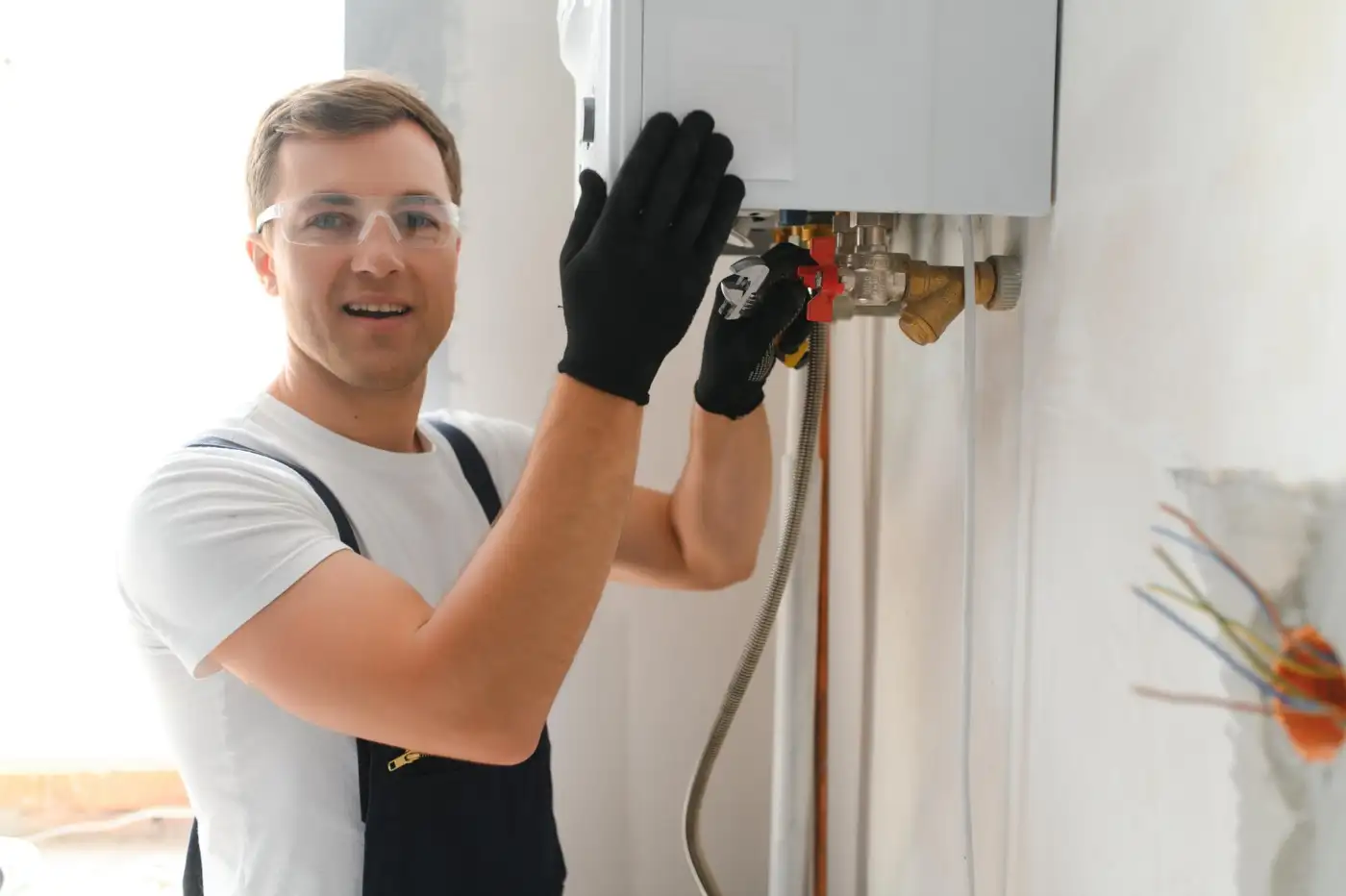
There's a local wrinkle UK guides skip entirely: roughly half the Island heats with oil, because mains gas only reaches a defined set of towns. If your let runs on oil, Gas Safe is the wrong scheme — oil appliances are serviced by an OFTEC registered technician (why choose an OFTEC registered competent person). On the Isle of Man we regularly come across landlords who've inherited an oil-fired property and assumed the gas rules apply, or vice versa. There's no statutory 12-monthly oil check the way there is for gas, but an annual OFTEC service keeps the appliance safe and satisfies the "inspected and serviced where appropriate" standard — so we'd treat it as a yearly job either way.
Do Isle of Man landlords need an EICR?
Not as a fixed legal interval — and this is the single most common mistake imported from UK guides. England requires a private landlord's electrical installation to be inspected and tested at least every five years and to hold a satisfactory EICR (Electrical Installation Condition Report). That five-yearly rule is an England rule. It is not Isle of Man law.
What does apply is Minimum Standards item 16: the electrical installation must be safe, comply with the relevant statutory requirements, and have been "inspected and serviced where appropriate." There's no Island statute setting the five-year clock — but if a tenant, a court or DEFA ever asked you to show your electrics were safe, an EICR from a qualified electrician is the recognised, documented way to prove it. So while you're not legally bound to a date, an EICR is the sensible evidence to hold, and a five-year cycle is a reasonable benchmark to adopt voluntarily. Our EICR guide for Isle of Man landlords explains what the report covers and how to read the codes.
The honest summary: no English EICR deadline here, but the duty to keep electrics safe is real, and an EICR is how you evidence it.
A quick call is usually the fastest way to work out whether your property needs an EICR now or a gas check is overdue.
What about fire safety, smoke alarms and appliances?
Fire is where Island landlords most often over-apply English rules — there is no per-storey smoke-alarm law on the Isle of Man as there is in England. Instead, the duty comes back to the Minimum Standards: the property must be "in full compliance with Fire Safety and, where applicable, Flat Regulations" and have "satisfactory provision for detecting fires" (Minimum Standards for Landlord Registration).
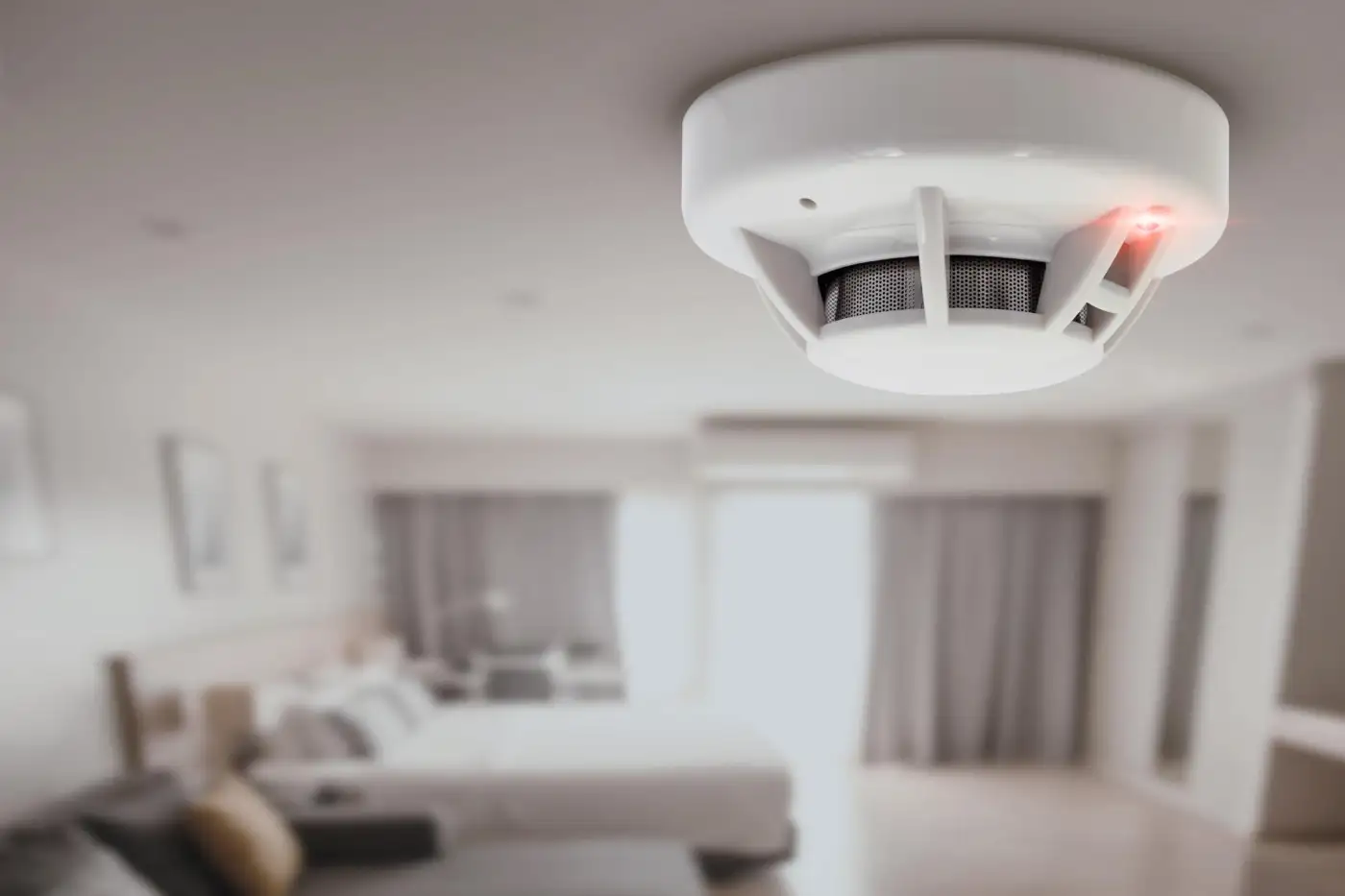
That's an outcome standard, not a counting rule. "Satisfactory provision for detecting fires" doesn't prescribe an alarm per storey, but a property with no working smoke detection plainly wouldn't meet it. The practical, defensible approach is the one good landlords already take: working smoke alarms covering the escape route, a carbon monoxide alarm near any fuel-burning appliance, and alarms that are tested and in date. The Island's older housing stock — solid-wall terraces, converted flats, properties with solid-fuel or oil heating — makes that detection genuinely worth getting right rather than treated as a box to tick.
The Minimum Standards also reach your contents. Item 17 expects landlord-supplied appliances to be in reasonable repair and Portable Appliance Tested (PAT) "where appropriate." That doesn't mean PAT-testing every kettle on a calendar; it means the white goods and appliances you provide should be safe and, where it's sensible to evidence it, tested.
Do you need an EPC to let a property?
Yes — an Energy Performance Certificate is needed to market a property for sale or let on the Island, so you'll need a valid EPC before advertising your rental, and you should check the current gov.im guidance for the up-to-date detail. One important caution: England's MEES rule, which bars letting a property rated below E, is an England regime, and we are not asserting it applies on the Isle of Man — confirm the current Island position before assuming a minimum rating blocks your let.
Across all of this, the thread is the same: gas is your firm, dated, DEFA-enforced duty; everything else is an outcome standard you meet by keeping the property safe and holding the evidence — and registering, even voluntarily, is the cheapest move you can make today.
Frequently asked questions
What obligations does a landlord have on the Isle of Man? You must keep the property safe and in working order under the gov.im Minimum Standards — covering gas, electrics, heating, water, fire detection and landlord-supplied appliances. The one fixed, dated legal duty is the annual gas safety check by a Gas Safe registered engineer.
Do I have to register as a landlord on the Isle of Man? Not strictly yet. The Landlord Registration (Private Housing) Act 2021 provides for mandatory registration, but the regulations aren't approved by Tynwald, so the live scheme is currently voluntary. Voluntary registrants transfer to the mandatory scheme free of charge when it starts.
Do Isle of Man landlords need an EICR? There's no England-style statutory five-yearly EICR requirement here. But your electrics must be safe and "inspected where appropriate" under Minimum Standards item 16, and an EICR is the recognised way to evidence that — so it's strongly advisable rather than legally timetabled.
Is a gas safety check a legal requirement for landlords? Yes. Under the Gas Safety (Installation and Use) Regulations 1998, applied on the Island and enforced by DEFA, gas appliances and flues in let property must be checked at intervals of no more than 12 months by a Gas Safe registered engineer, with the record given to the tenant.
Do I need an EPC to let a property? Yes — an Energy Performance Certificate is required to market a property for let on the Isle of Man, so arrange one before advertising. Check current gov.im guidance for the detail, and don't assume England's minimum-rating rule applies here.