
On the Isle of Man, PAT testing is not a blanket legal duty for landlords. The Island requirement sits in the Minimum Standards for Landlord Registration checklist, where item 17 asks for "landlord appliances in repair and PAT tested 'where appropriate'" (gov.im). Those last two words carry the weight. It is a conditional standard, judged appliance by appliance, not an instruction to test everything you own every twelve months. There is no confirmed statutory PAT interval for an ordinary Manx let, so outside houses in multiple occupation this sits as good practice supported by a registration standard, rather than a dated legal deadline.
There is a second point worth knowing before you spend anything. A PAT test looks at plug-in appliances you supply. It says nothing about the fixed wiring behind the walls, which is a separate inspection with a separate report. Most landlords who ring about PAT actually need to think about both.
Is PAT testing a legal requirement for Isle of Man landlords?
No, not as a standing obligation on every appliance. The wording in item 17 of the Minimum Standards for Landlord Registration checklist is conditional: appliances must be in repair and PAT tested "where appropriate" (gov.im). That leaves the judgement with you, and it is a judgement you should be able to explain if anyone asks.
In practice, "where appropriate" points at the appliances you supply and the tenant relies on. A furnished let with a landlord's kettle, microwave, washing machine and tumble dryer is a different proposition from an unfurnished flat. Age matters too. Second-hand white goods inherited from a previous tenancy carry more risk than something bought new last spring.
Be careful with advice written for elsewhere. Great Britain's Health and Safety Executive publishes workplace guidance on portable appliance testing (hse.gov.uk), and it is useful reading, but it is not Isle of Man landlord law. The Electrical Safety Standards in the Private Rented Sector (England) Regulations 2020, SI 2020/312, are England only, do not extend to the Island, and in any case concern fixed-wiring inspection rather than appliances. A supplier quoting you an annual PAT obligation on either basis is describing somewhere else. Our wider guide to landlord safety responsibilities on the Isle of Man sets the whole registration picture out.
If you would rather have an electrician look at the property than work through this on your own, start here.
What is actually covered — appliances or the fixed wiring?
PAT covers portable appliances supplied by the landlord. Anything with a plug that you provide, in short. An EICR — an Electrical Installation Condition Report — is a periodic inspection of the fixed installation: the wiring, the consumer unit (the fuse board), the sockets and the circuits, checked against BS 7671, the national wiring standard. Two different jobs, two different pieces of paper.
The distinction matters more here than in a newer English suburb. A good deal of Island housing stock is old, and older properties are where you find add-on circuits and boards extended rather than replaced. Salt-laden wind and persistent damp are hard on outside sockets, garage supplies and outbuildings. None of that is picked up by testing a kettle.
This table sets the two apart in the terms a landlord actually has to decide between.
| Question | PAT test | EICR |
|---|---|---|
| What it looks at | Plug-in appliances the landlord supplies | The fixed installation: wiring, consumer unit, sockets, circuits |
| Standard applied | Appliance in repair and safe to use | BS 7671 |
| Where the Island duty comes from | Minimum Standards checklist item 17, "where appropriate" | HMO standard regulations require periodic inspection of the electrical installation |
| Statutory interval for an ordinary let | None confirmed on the Island | England's five-yearly rule is England only and does not apply here |
| Who it usually matters most to | Furnished lets and HMOs | Older properties, and every HMO |
Neither test replaces a gas safety check, and neither has anything to say about an oil boiler. Keep those separate in your head and in your paperwork.
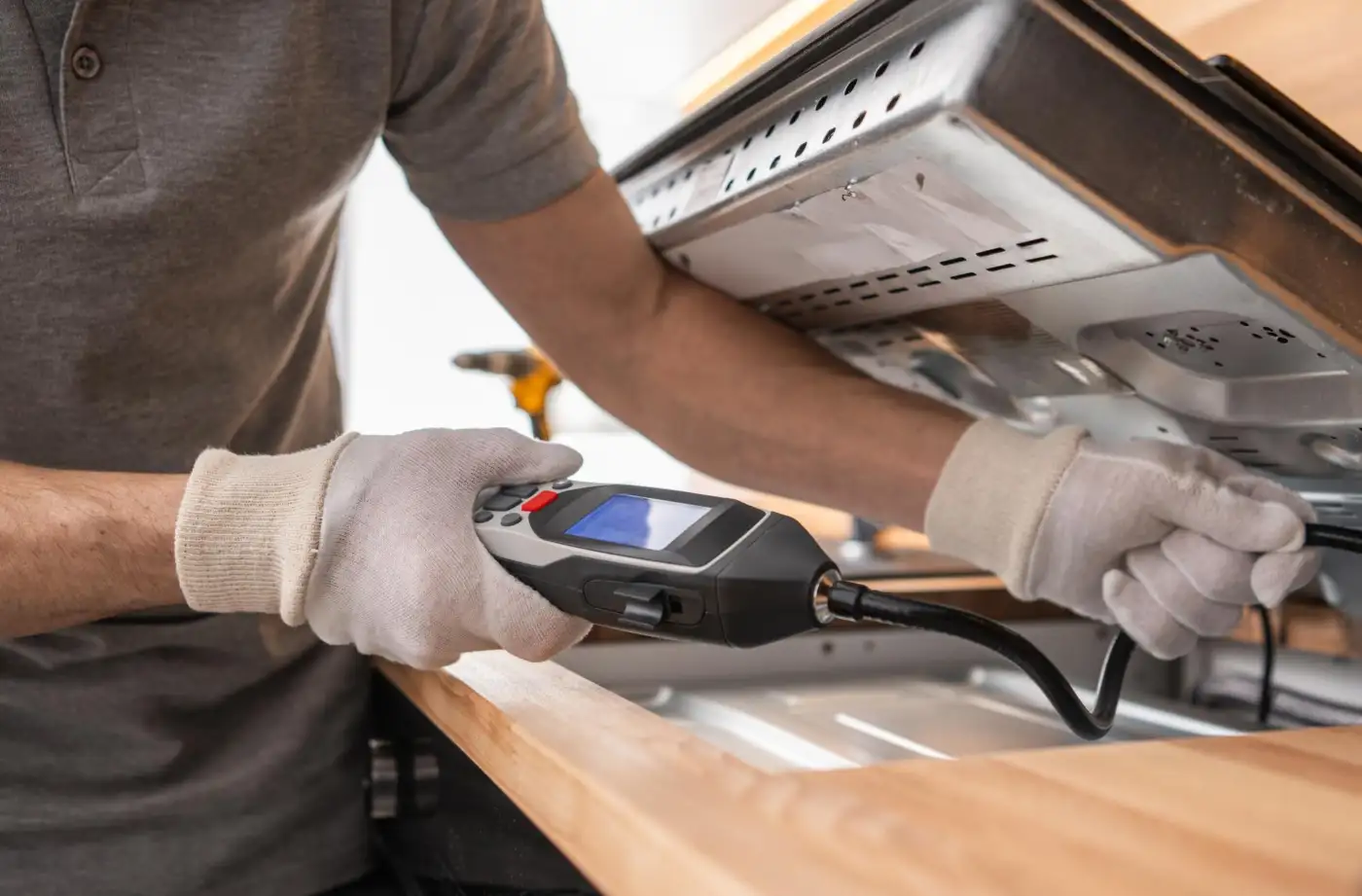
When does an HMO change the answer?
A house in multiple occupation is the one case where the latitude of an ordinary let falls away. The Island's HMO standard regulations require periodic inspection of gas, electrical and oil installations by competent persons, with records kept for at least five years. That is an explicit inspection duty with an explicit record-keeping period, and it is enforced against the property.
The practical effect is that the fixed installation has to be on a schedule, not on a hunch. Shared kitchens also tend to have more landlord-supplied appliances in harder use than a single-family let, which pushes the "where appropriate" judgement firmly towards yes. If you are not certain whether your property counts as an HMO, our guide to HMO rules on the Isle of Man explains where the line sits.
Plan HMO inspections earlier than feels necessary. The pool of electricians on the Island is small, replacement parts often wait on a ferry, and a report that finds remedial work in September can easily leave you organising a fix in November.
Fenshaw covers plumbing, electrical, heating, joinery, bathrooms and kitchens under one brand, with a single point of contact for the whole property. A phone call is usually quicker than three quotes.
Who can carry out a PAT test, and what records should a landlord keep?
There is no Island register specific to PAT that we can point you to, so judge the person rather than the badge on the van. Ask what qualifications they hold, ask which scheme they are registered with for electrical work — NICEIC and NAPIT are the usual ones — and ask to see the card rather than taking the logo on a website as proof. That advice holds for any tradesperson you let into a tenanted property, including us.
On records, do what the HMO regulations ask even if you do not let an HMO. Keep a list of every appliance you supply, with the date it was tested, the result and who tested it. Five years is a sensible retention period, because that is the benchmark the HMO standard regulations already set. Photograph the labels as well as filing the certificate, since labels fall off tumble dryers.
The point of the paperwork is being able to show, at registration or after an incident, that you formed a reasonable view of which appliances needed testing and acted on it.
Is PAT the same as an EICR?
No, and treating them as interchangeable is the common mistake. PAT is about the appliances. An EICR is about the installation they plug into, inspected against BS 7671 and reported with codes that say what needs remedying and how urgently. A clean set of PAT labels tells you nothing about a consumer unit with no RCD protection.
If you only budget for one thing this year, the fixed installation is usually the bigger risk in older Island housing. Our guide to EICRs for Isle of Man landlords covers what the report contains, what the codes mean and what to do with a C2.
Frequently asked questions
How often should I PAT test appliances in an Isle of Man let?
There is no confirmed statutory interval for an ordinary let here. The Minimum Standards checklist asks for appliances in repair and PAT tested "where appropriate" (gov.im), which means you set a sensible schedule based on the appliance, its age and how hard the tenant uses it, and you write down why.
Does the England five-yearly electrical rule apply to me?
It does not. The Electrical Safety Standards in the Private Rented Sector (England) Regulations 2020, SI 2020/312, are England only and do not extend to the Isle of Man. They also deal with fixed-wiring inspection rather than appliance testing.
Do I need to PAT test a tenant's own appliances?
The checklist wording concerns landlord appliances. Items the tenant brings in are theirs. If you inherit an appliance left behind at the end of a tenancy and then supply it to the next tenant, it has become a landlord appliance, and it is exactly the sort of item that "where appropriate" is pointing at.
What if my property is an HMO?
The HMO standard regulations require periodic inspection of gas, electrical and oil installations by competent persons, with records kept for at least five years. Treat that as the baseline, and treat landlord-supplied appliances in shared kitchens as appropriate for testing.
What does PAT testing cost on the Island?
No verified figure is available, and quoting one would be guesswork. Ask two local electricians for a price based on the number of appliances, and ask whether the quote includes a written schedule of results rather than labels alone.
If you want one conversation that covers the appliances, the wiring and whatever else the property throws up, see what we handle.
Test what you supply, inspect what is behind the walls, and keep the note that says which you decided and when.