
If your boiler keeps losing pressure, the gauge should sit at 1–1.5 bar when the heating is off — and if it has dropped below that, your boiler may lock out and stop heating. The good news is that topping it back up is usually a safe job you can do yourself. You re-pressurise using the filling loop (a flexible silver hose under the boiler), letting cold mains water in until the needle reaches the green band, then closing it off. A one-off drop after you have bled a radiator, or a slow fall that needs a top-up once or twice a year, is normal. What is not normal is needing to top up every few days or weeks — that points to a small leak, a failed expansion vessel or a weeping pressure relief valve, and on the Isle of Man, where a spare part can be days away across the water, that is worth investigating sooner rather than later.
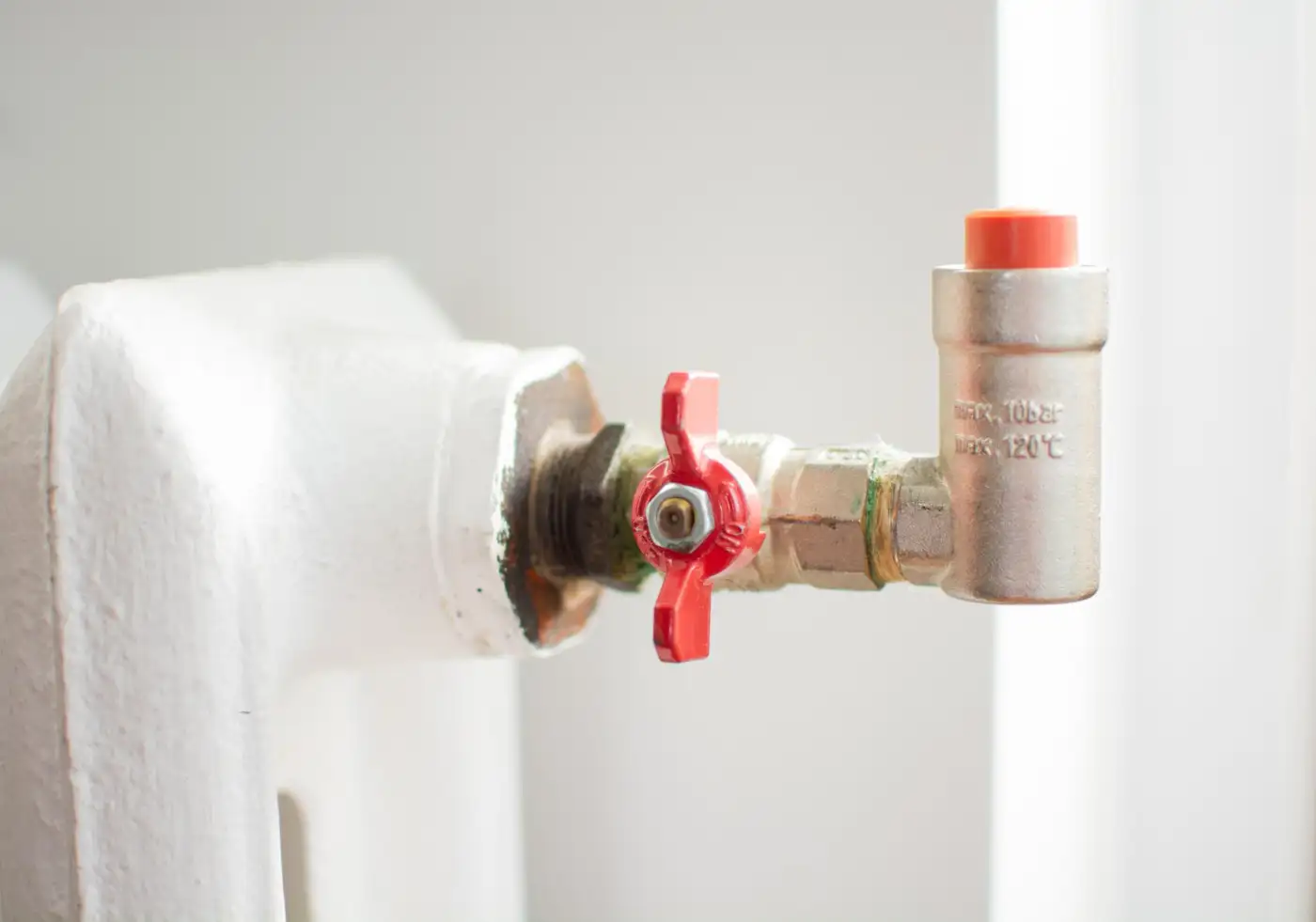
What pressure should my boiler be at?
Pressure is simply how hard the water is being pushed around your sealed heating system, and your boiler has a gauge — either a round dial or a digital readout — that shows it in bar. Get the number right and most pressure worries answer themselves.
When the heating is off and cold, the gauge should read 1–1.5 bar. As the system heats up, the water expands and the pressure rises by around half a bar, so seeing it climb to roughly 2 bar when everything is hot is perfectly normal — not a fault, according to British Gas. The problem is the other direction. If the cold reading falls much below 1 bar, the boiler often detects it as too low and shuts down — a safety lock-out — which is why a low-pressure boiler tends to stop producing heat or hot water rather than carry on regardless. Worcester Bosch gives the same normal range. Check the gauge cold, before the heating has fired, and you will know straight away whether you have a genuine problem or just a system warming up.
Why does my boiler keep losing pressure?
A sealed system should hold its pressure for months, so a gauge that keeps falling is telling you something is letting water or air escape. There are a handful of usual suspects, and they range from completely harmless to a job for an engineer.
The most common cause is a small leak — often at a radiator valve or a pipe joint rather than the boiler itself. It can be slow enough that you never see a puddle, just a gauge that drifts down over weeks. The next is the most innocent: if you have recently bled your radiators, you have deliberately let air out, and that drops the pressure, so a top-up afterwards is expected, not a fault. Beyond those, Ideal Heating points to a failed or undercharged expansion vessel — the sealed chamber that absorbs the expansion of hot water — and a weeping pressure relief valve, which is designed to release water if pressure ever runs too high but can drip when it is worn. A spell of cold weather can nudge the reading too. The pattern matters more than any single drop: an occasional top-up is fine, but a steady, repeating loss is the sign worth acting on.
If you have just bled your radiators and the pressure has dropped, that is the cause — and our guide on how to bleed a radiator explains the order to do it in so you are not chasing the same drop twice.
How do I re-pressurise my boiler? (step by step)
Re-pressurising is one of the few boiler jobs a homeowner can safely do without an engineer, because it touches only the water side of the system — the filling loop and the mains supply — and never the gas side or the inside of the boiler. If the steps below feel unfamiliar, take it slowly; nothing here requires you to open the boiler or disturb any gas component.
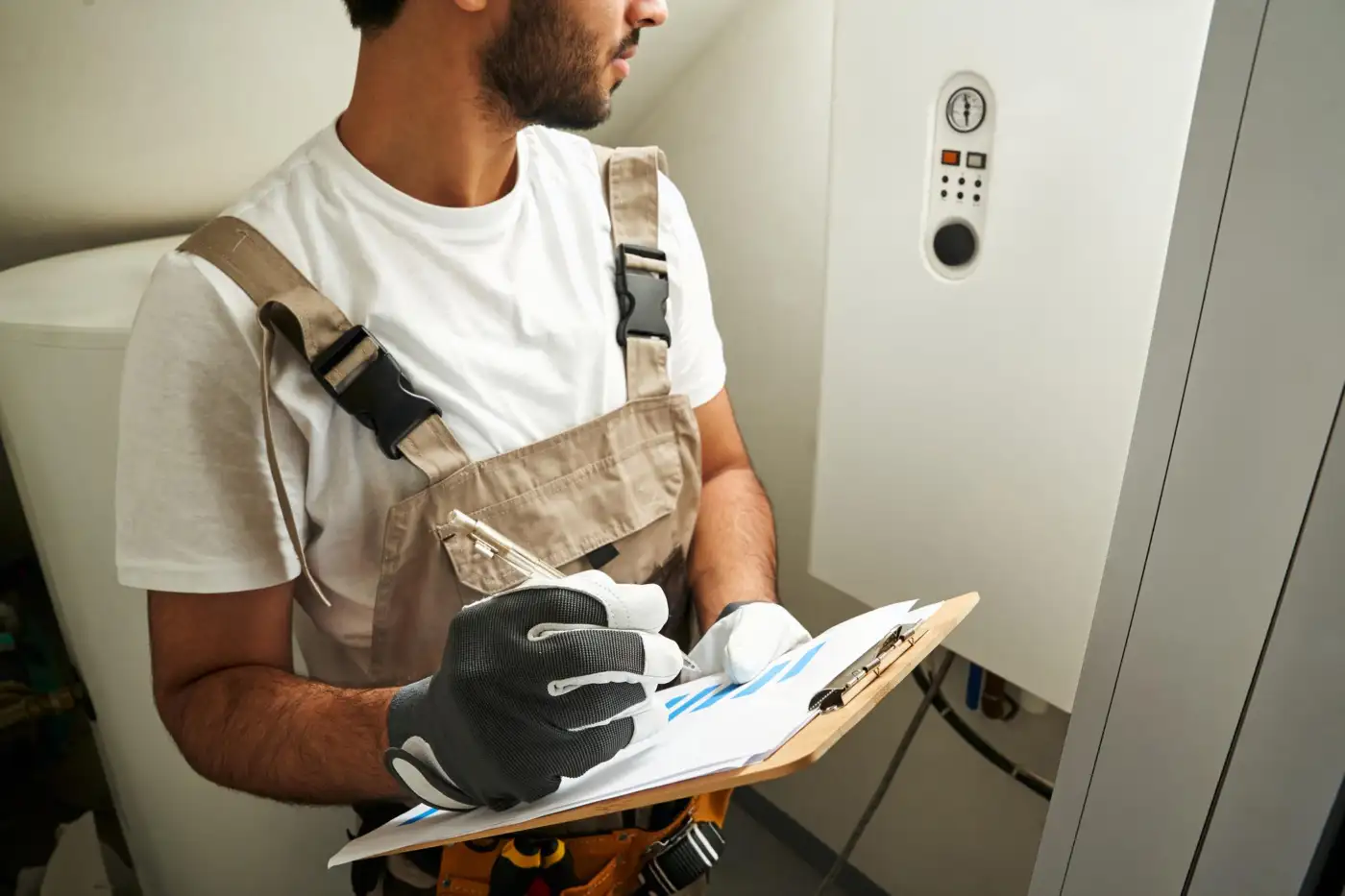
First, find your filling loop: a flexible silver braided hose connecting two pipes underneath the boiler, with a small valve (a tap or lever) at each end. British Gas sets out the same sequence we use:
- Turn the boiler off and let it cool completely.
- Locate the filling loop — the flexible silver hose with a valve at each end.
- Open both valves to let cold mains water flow into the system. You should hear the water moving.
- Watch the pressure gauge and let it rise to 1–1.5 bar.
- Close both valves firmly, one then the other, as soon as it reaches the band.
- Switch the boiler back on, and press the reset button if it needs it.
The single most common mistake is overfilling — open the valves gently and close them the moment the needle hits 1.5 bar, because pushing it well past 2 bar can make the pressure relief valve discharge. If the gauge will not hold the pressure you just put in, or it climbs straight back down within a day or two, stop topping up and have it looked at; you are masking a fault, not fixing one.
When is it normal and when should I call an engineer?
Knowing the difference between a quirk and a fault saves you both money and a cold weekend. The deciding factor is not the drop itself but how often you are having to correct it.
A boiler that needs a small top-up once or twice a year is generally behaving normally — sealed systems lose a touch of pressure over time, and the odd re-pressurise is just routine upkeep. But if you are reaching for the filling loop every few days or weeks, that is not normal: it means water is escaping through a leak, or a component such as the expansion vessel or pressure relief valve has failed, and topping up over and over only postpones the real repair. That is the point to call a professional. A persistent leak inside or behind the boiler, repeated lock-outs, or any smell of gas are all reasons to stop and get a qualified engineer out.
Use the right registration for your fuel. A gas boiler must be worked on by a Gas Safe registered engineer; an oil boiler by an OFTEC registered technician — the scheme that covers oil-fired heating here on the Island, where a good share of homes run on oil rather than mains gas. The Isle of Man angle matters for one more reason: parts come across the water. If a recurring pressure fault is left to drift and the boiler finally fails, the expansion vessel or valve it needs may not be held locally and can take days to arrive — without heating or hot water in the meantime. Acting on a repeating drop early means the part can be ordered calmly rather than in the middle of a cold snap.
A recurring pressure loss is also exactly the kind of fault a yearly check is meant to catch before it strands you — we cover what that involves, and what it costs locally, in our guide to boiler service cost on the Isle of Man. You can see the full range of heating work our team handles on our services page.
A boiler losing pressure is rarely the emergency it feels like at the time. Get the gauge back to the green band yourself, watch how quickly it falls, and let the pattern make the call: an annual top-up you can shrug off, a weekly one you should not. On an island where the right part can be a ferry away, the cheapest fix is always the one you book before winter does it for you.
Frequently asked questions
How do I fix my boiler that keeps losing pressure? Re-pressurise it using the filling loop: turn the boiler off and let it cool, open both valves on the silver hose to let cold mains water in, watch the gauge rise to 1–1.5 bar, then close the valves and reset the boiler. If it drops straight back down within days, stop topping up — that points to a leak or a faulty part and needs an engineer.
Can a boiler lose pressure without a leak? Yes. Bleeding your radiators releases air and lowers the pressure, so a drop afterwards is expected. A failed or undercharged expansion vessel, a weeping pressure relief valve, or even a spell of cold weather can also lower the reading without any visible water leak.
How often is it normal for a boiler to lose pressure? Needing a small top-up once or twice a year is generally normal. Having to re-pressurise every few days or weeks is not — it usually means a leak or a faulty component and should be investigated rather than repeatedly topped up.
What pressure should my boiler be at? About 1–1.5 bar when the heating is off and cold. It is normal for the reading to rise to roughly 2 bar when the system is hot, because the water expands as it heats. If the cold reading falls much below 1 bar, the boiler may lock out and stop heating.