
Fit a carbon monoxide alarm in every room that has a fuel-burning appliance — a gas boiler or fire, an oil boiler, or a solid-fuel stove — and in any room a flue passes through, siting it 1 to 3 metres from the appliance and at least 15 cm from the ceiling. Keep working smoke alarms on your escape route. On the Isle of Man the duty for an ordinary let is an outcome standard — "satisfactory provision for detecting fires" under the gov.im Minimum Standards for Landlord Registration — not England's per-storey smoke-alarm and per-appliance CO-alarm rule, which is an England regulation and does not set the Island's legal position. Flats and houses in multiple occupation are different again: they carry prescriptive fire-alarm and fire-door requirements under the Fire Precautions (Houses in Multiple Occupation and Flats) Regulations 2016. Because roughly half the Island heats with oil and solid-fuel burners are common, carbon monoxide is an every-fuel risk here, not a gas-only one.
Where should you fit a carbon monoxide alarm?
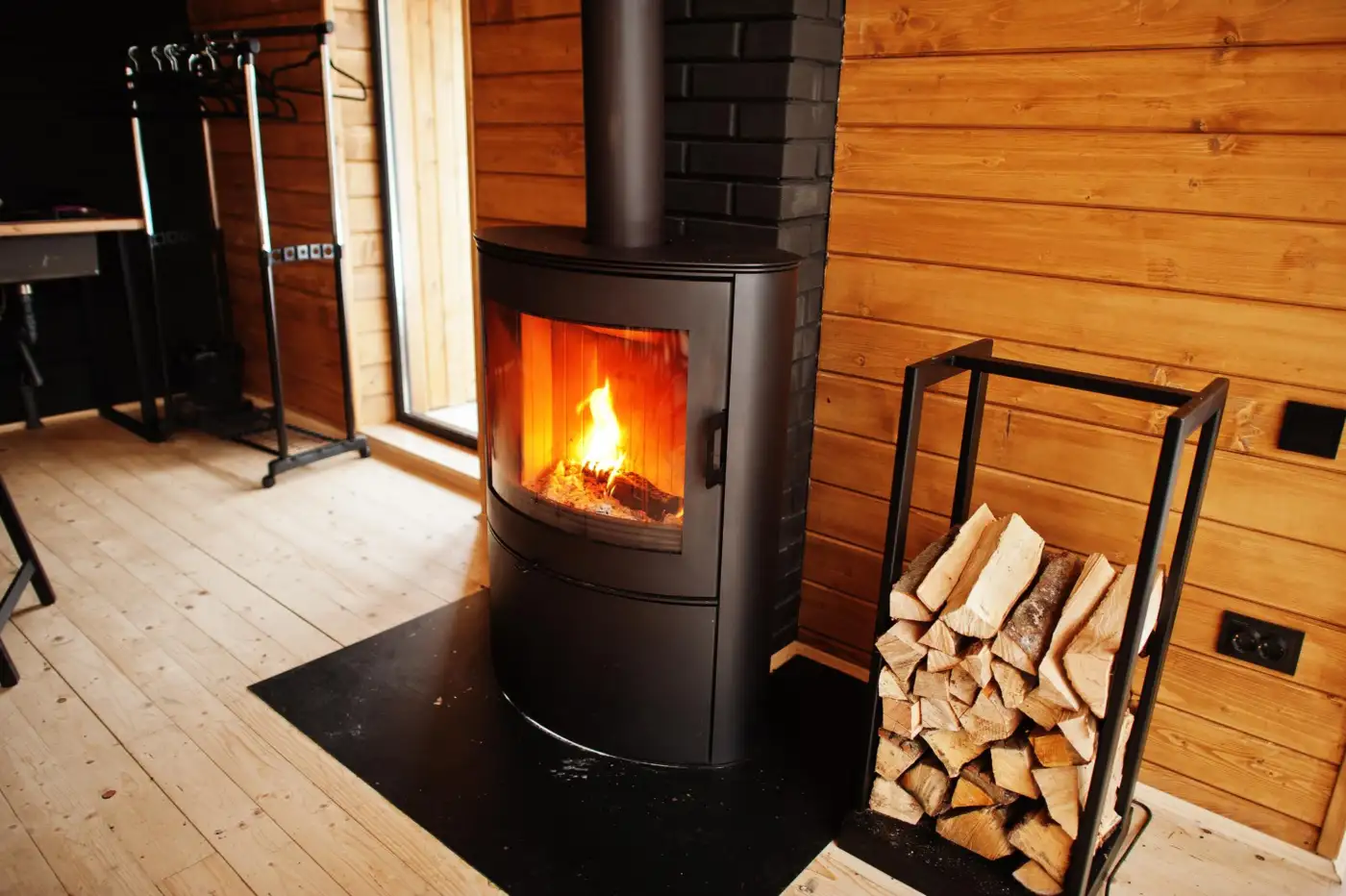
A carbon monoxide alarm belongs in every room that holds a fuel-burning appliance, plus any room a flue runs through on its way out of the building. That covers more than people expect: a gas boiler or gas fire, yes, but equally an oil boiler and a solid-fuel stove or log burner. If the alarm sits in the same room as the appliance, the manufacturers' guidance is consistent — mount it 1 to 3 metres horizontally from the appliance, at least 15 cm from the ceiling and above the height of any door or window (Aico alarm siting; Baxi guidance on carbon monoxide detectors).
Where you don't put it matters just as much. Keep the alarm away from spots that either hide it or fool the sensor:
- not shut inside a cupboard, cabinet or boiler enclosure
- not directly above a sink, cooker or hob
- not next to a window, door or extractor fan, where a draught can pull fumes away before the sensor reads them
- not tucked behind curtains or furniture that blocks the air
When you buy one, look for the EN 50291 mark — the British and European standard for domestic carbon monoxide alarms — and note the sensor's replace-by date, because the sensor inside has a working life and the whole unit is replaced when it expires (carbon monoxide alarm rules across the UK). A CO alarm is not the same device as a smoke alarm and does not replace it; a home needs both.
Getting the siting right is a five-minute job, but it is the sort of detail an engineer will check while servicing your heating.
Why does carbon monoxide matter more on the Isle of Man?
Most UK carbon monoxide advice is written as though every home runs on mains gas. On the Island that assumption falls down. Mains gas reaches only a defined set of towns, so roughly half the Island heats with oil, worked on by an OFTEC registered technician rather than a gas engineer — and solid-fuel stoves and log burners are common on top of that. Carbon monoxide is produced by any fuel that burns incompletely, so gas-only guidance under-serves a lot of Manx homes.

The alarm is your last line of defence, not your first. The first is a working appliance that burns cleanly, and that is what an annual service checks. Gas here runs on the same Gas Safe register as the UK mainland, applied on the Island and enforced by DEFA (gov.im gas safety regulations); oil is serviced by an OFTEC technician and a solid-fuel stove by a competent sweep or engineer. A service catches a blocked flue, a cracked heat exchanger or a poorly burning appliance before it can produce carbon monoxide. British Gas notes that more than 100 people a year died from accidental carbon-monoxide poisoning in England and Wales across the 2010s (British Gas boiler servicing guide) — a reminder of why the yearly check earns its place, without overstating the everyday risk.
On the Island we service gas, we service oil, and we see plenty of wood burners, so we treat carbon monoxide as an every-fuel risk rather than a gas-only one. If your property runs on oil or solid fuel, the annual service still applies — simply a different registered trade doing it. For the gas side specifically, our guide to the landlord gas safety certificate on the Isle of Man sets out what the 12-monthly check covers and what a valid record looks like.
If you're not sure when your boiler was last serviced, or which trade should be doing it, a quick call will sort it.
What are the smoke and fire-alarm rules for Isle of Man landlords?
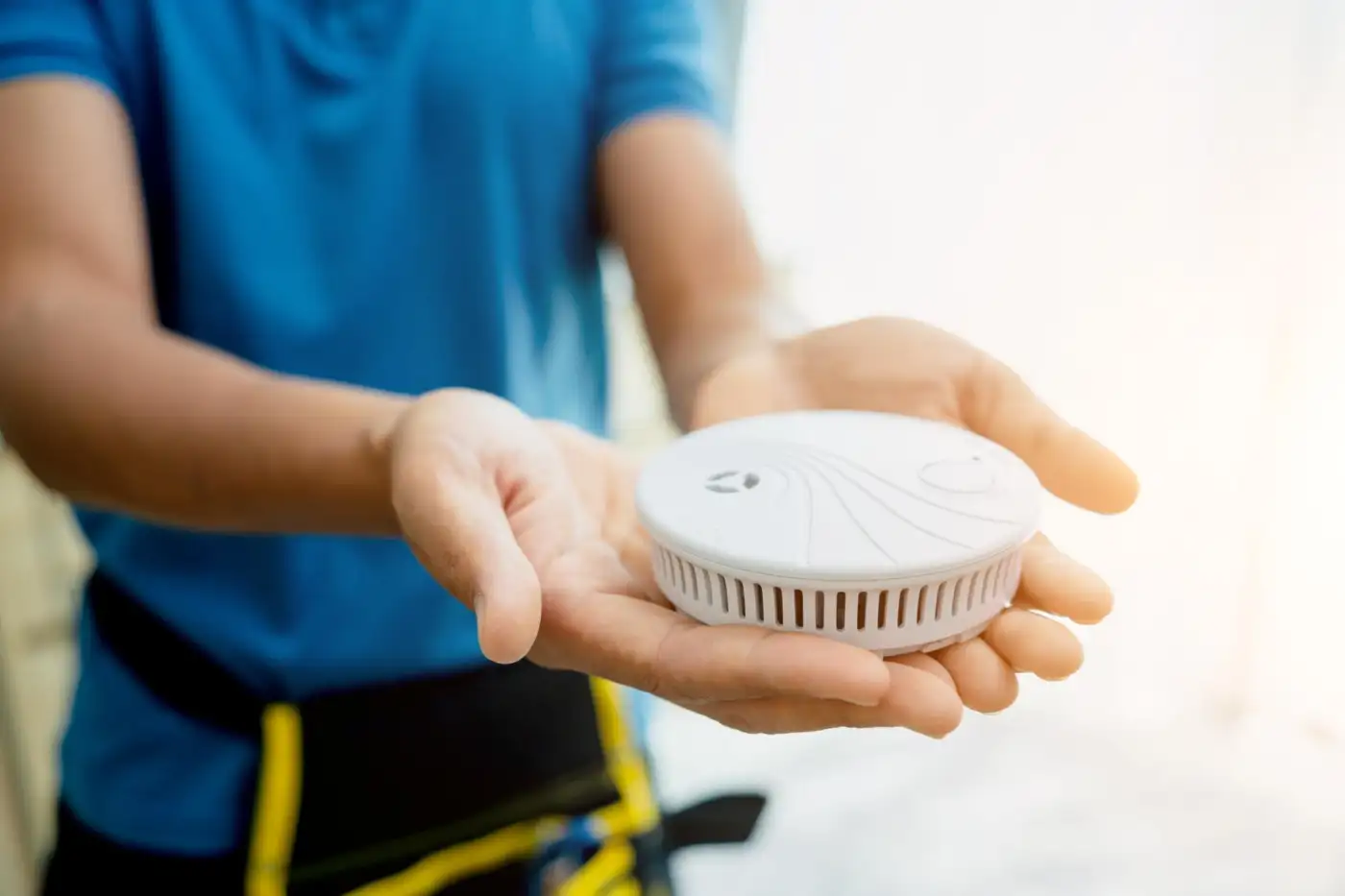
For an ordinary single-family let, the fire-detection duty is an outcome standard, not a counting rule. When a landlord registers, they declare that the property "Has satisfactory provision for detecting fires" (item 14) and is "in full compliance with Fire Safety and, where applicable, Flat Regulations" (item 4) under the gov.im Minimum Standards for Landlord Registration. That asks for detection that actually works — it does not fix a number of alarms per storey.
This is where UK guides mislead Island landlords. England's Smoke and Carbon Monoxide Alarm (England) Regulations 2015 (amended 2022) require a smoke alarm on every storey and a carbon monoxide alarm in every room with a fixed combustion appliance. That is a useful benchmark for what "good" looks like, and it is roughly the standard a careful landlord would meet anyway — but it is an England regulation and it is not the Isle of Man's statutory position for ordinary lets. Meet the outcome, keep the evidence, and you have covered the actual Manx duty.
Step up to a flat or a house in multiple occupation and the picture changes sharply. There the Island has its own prescriptive framework: the Fire Precautions (Houses in Multiple Occupation and Flats) Regulations 2016 (SD No. 2016/0218) set fire-alarm systems, fire doors, escape routes and testing and recording duties, all scaled by the number of storeys and floor area (2016 Regulations, legislation.gov.im). We cover that split in full in our guide to HMO rules on the Isle of Man, and the wider gas, electrical and fire duties in our overview of landlord safety responsibilities on the Isle of Man.
Do you legally need a carbon monoxide alarm in your home?
For a homeowner, there is no per-room carbon monoxide statute on the Island — but that is the wrong question. A CO alarm by every fuel-burning appliance is cheap, quick to fit, and the accepted standard whether or not a law names it. Treat it as normal safety kit, especially in the older, well-sealed properties common across the Island.
For a let, the hard duty is the outcome standard for ordinary lets and the prescriptive regime for flats and HMOs, both covered above. A CO alarm by every fuel-burning appliance is how a landlord meets "satisfactory provision" in practice — not a separate per-room count named in Manx law for ordinary lets. As a benchmark, England now expects a carbon monoxide alarm whenever a new or replacement fixed solid-fuel appliance goes in (carbon monoxide alarm rules across the UK) — good practice worth following on the Island, not an Isle of Man statutory requirement.
The through-line is simple: on the Island, carbon monoxide comes from oil and wood as readily as from gas, so an alarm on every fuel and a service every year is the pairing that protects a home — the law is the floor, not the ceiling.
Frequently asked questions
Where should a carbon monoxide alarm be placed? In every room that has a fuel-burning appliance and any room a flue passes through. If it's in the same room as the appliance, fit it 1 to 3 metres horizontally away, at least 15 cm from the ceiling and above door or window height — not in a cupboard, not directly above a hob, and not beside a window or extractor fan. Look for the EN 50291 mark.
Do I need a carbon monoxide alarm with a gas boiler? It's strongly advisable. A well-serviced boiler burns cleanly, but a fault, a blocked flue or a cracked heat exchanger can produce carbon monoxide, so an alarm in the room with the boiler is the sensible backstop alongside an annual Gas Safe service.
Are smoke alarms a legal requirement for landlords on the Isle of Man? For an ordinary let, the duty is the Minimum Standards outcome — "satisfactory provision for detecting fires" — rather than England's per-storey rule, which does not set the Island's legal position. Flats and HMOs have prescriptive fire-alarm requirements under the Fire Precautions (Houses in Multiple Occupation and Flats) Regulations 2016.
Do you need a carbon monoxide alarm for an oil boiler? Yes, the same as for gas. Carbon monoxide is a risk from any fuel that burns, including oil, so fit an alarm in the room with the oil boiler and have the appliance serviced yearly by an OFTEC registered technician.
How many smoke alarms do I need? There's no fixed Island count for an ordinary home or let — the standard is detection that works. In practice that means working smoke alarms covering the escape route and a carbon monoxide alarm by each fuel-burning appliance, all tested regularly and in date. Flats and HMOs follow the scaled system set by the 2016 Regulations.