
Yes, some electrical work in a home has to be notified. On the Island, "Certain aspects of electrical work carried out in homes (dwellings) must be notified to the Isle of Man's Planning and Building Control Directorate", and must "be certified as being compliant with Schedule 1, Part P (Electrical Safety) of the Building Regulations 2014" (Isle of Man Planning and Building Control). That matters, because "those who do not comply with the Building Regulations are committing a criminal offence". There are two routes: either your electrical business is registered with one of the two certification schemes the Isle of Man Government recognises, so it self-certifies and issues you a certificate of compliance within 30 days; or, if it is not, you must apply to your Building Control Authority for approval before any work starts on site, and pay the fees. England's Part P lists are different and do not set the position here.
What Part P actually means on the Island
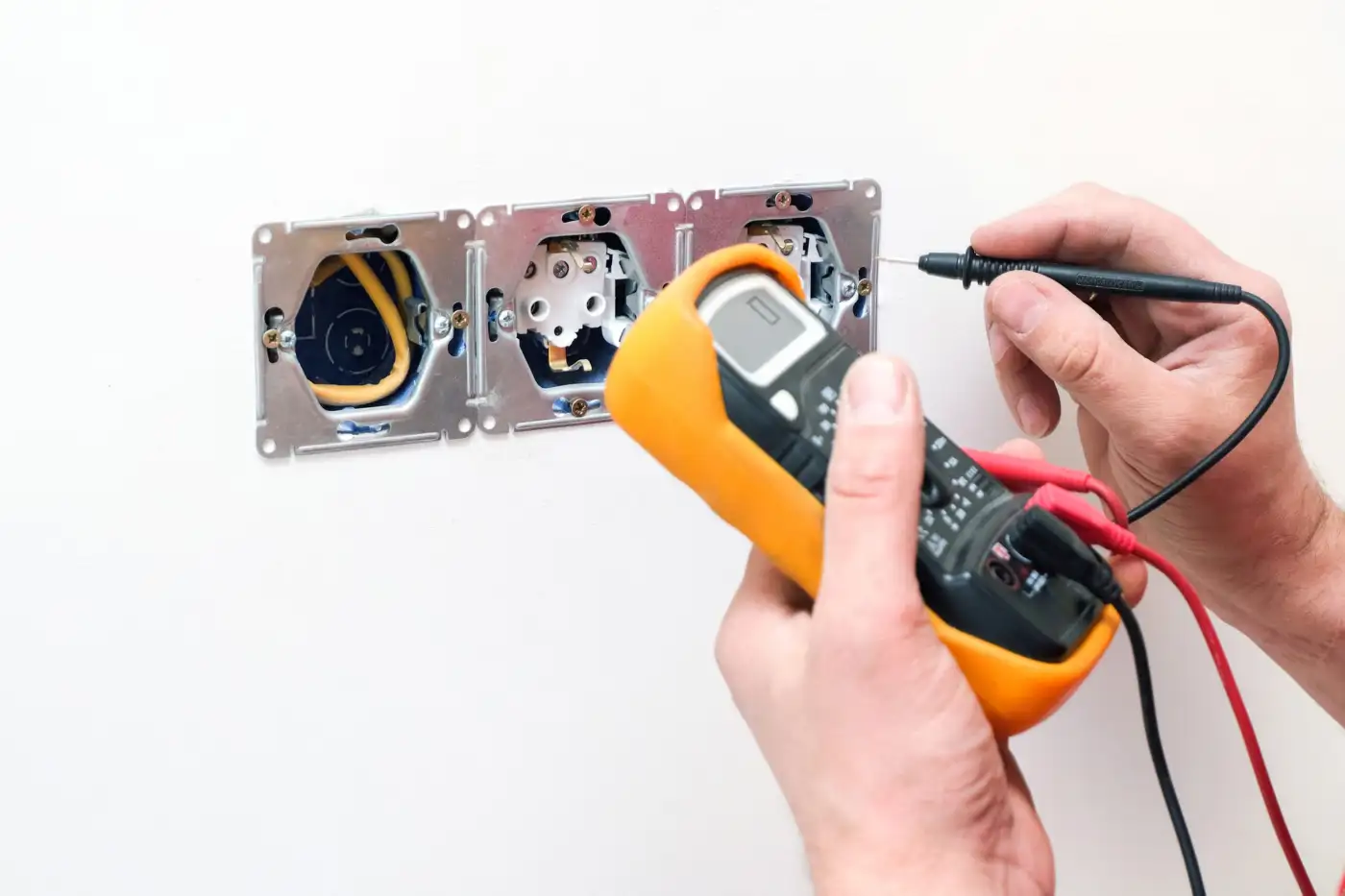
Part P is the electrical-safety part of Schedule 1 to the Building Regulations 2014 — the Island's own regulations, not an English set borrowed across. Its aim, in the Directorate's words: "The overall objective of 'Part P' is to improve industry standards and prevent injuries and risks caused by substandard domestic electrical installation work" (Isle of Man Planning and Building Control). Work inside its scope is notifiable: Building Control must be told, and someone competent must certify that it complies.
One distinction to hold on to: Building Control approval is not planning permission. The Building Regulations govern how something is built and whether it is safe; planning governs whether it may be built at all. Changing a consumer unit needs nothing from planning but sits squarely inside Part P. Your consumer unit is the modern fuse box: the main switch, the circuit breakers and the devices that cut the supply when a fault appears.
Which electrical jobs are notifiable, and which are not?
The Directorate publishes two lists: Table 2 is work that must be notified, Table 1 work exempt from notification that must still meet the Regulations. The practical version of both (Isle of Man Planning and Building Control):
| Where or what | Notifiable | Exempt from notification |
|---|---|---|
| The whole installation | A complete new installation or rewire; changing the consumer unit | Re-fixing or replacing enclosures of existing components; installing or upgrading main or supplementary equipotential bonding |
| New circuits | Any new final circuit for lighting, heating, socket-outlets, a shower or a cooker; power or control wiring for a new central heating system | Replacing the cable for a single circuit damaged by fire, rodents or impact |
| Fixed equipment | Extra-low-voltage lighting other than pre-assembled CE-marked sets; electric ceiling or floor heating | Replacing socket-outlets, control switches and ceiling roses with no new fixed cabling |
| Kitchens and special locations | Modifying a final circuit; extra-low-voltage wiring; a prefabricated equipment set | Adding lighting points, socket-outlets or fused spurs to an existing ring or radial circuit, but only outside a kitchen or special location |
| Outdoors | Garden lighting or power: a supply to a shed, detached garage, outbuilding, electric gate or pond pump; a socket-outlet; a lighting point or fixed equipment such as an air-conditioning unit or radon fan | Providing mechanical protection to an existing fixed installation |
| Generation | A solar photovoltaic power supply; a small-scale electricity generator | — |
A special location is one of the higher-risk areas the Regulations single out, and the Island's tables treat a kitchen the same way, which is why the exemption that lets you add a socket to an existing circuit in a bedroom stops at the kitchen door. Two common jobs are worth naming: a full rewire is notifiable end to end, and our guide to what a house rewire costs on the Isle of Man covers the work involved; an EV charge point on the Isle of Man is a new final circuit, so it is notifiable as well.
If you are unsure which side of the line your job sits on, settle it before the first cable is run.
The two routes to a certificate
The first route is a competent person doing the work and then contacting the Island Building Control Authority. The second, which most households use, is a registered electrical contracting business, which "can self-certify its own electrical work as being compliant with Part P" and "issue homeowners with a certificate of compliance within 30 days" (Isle of Man Planning and Building Control).
There are exactly two such schemes. As the Directorate puts it, "the Isle of Man Government recognises two certification schemes": NICEIC Domestic Installer and NAPIT Part P CPS. A firm may also belong to the Electrical Contractors Association, but the ECA is not one of the two recognised certification schemes, so membership of it alone does not let anyone self-certify (Isle of Man Planning and Building Control).
That gives you three questions for any electrician quoting for notifiable work, before you accept the quote:
- which of the two recognised schemes are you registered with, by name?
- will you notify Building Control and issue my certificate of compliance within 30 days?
- if you are not scheme-registered, who makes the Building Regulations application, and when?
Ask them of us as readily as of anyone else — they decide whether you finish holding a certificate or a problem. The range of work Fenshaw takes on is here; put all three questions to us at quoting stage.
What if your electrician is not registered with a scheme?
Then the application lands on you, and the timing catches people out. Where the business is not scheme-registered, the homeowner "must make an application for Building Regulations approval to the appropriate Island Building Control Authority… prior to any electrical work starting on site" and "must also pay any relevant plan and site inspection fee" (Isle of Man Planning and Building Control). Before work starts, not once it is finished. Building Control can be reached at buildingcontrol@gov.im or on +44 1624 685902.
The Department is direct: it "strongly recommends that unless you are experienced in the types of works mentioned in Tables 1 and 2, you should employ a competent electrical business to carry out the works for you." None of this obliges you to spend more than the job needs, though — much of the exempt column is ordinary maintenance, and no certificate follows it.
A certificate of compliance is not an EICR
These two documents get treated as interchangeable and they are not. An electrical installation certificate, or EIC, and the certificate of compliance that follows notifiable work both cover new work: this circuit, installed on this date, complies. An EICR, an electrical installation condition report, is a periodic inspection of an installation that already exists, grading its condition and listing what needs putting right. A folder full of EICRs does not make unnotified work notified.
Landlords deserve one further distinction. England's requirement for an EICR every five years in the private rented sector is an England regulation and does not set the duty for an ordinary Isle of Man let. Our guide to EICRs for Isle of Man landlords sets out where the Island genuinely stands.
On the Island the certificate is the only lasting evidence that the work behind your walls was ever checked by someone who had to put their name to it.
Frequently asked questions
The questions that come up most often once a job turns out to be notifiable.
Do I need a Part P certificate on the Isle of Man?
If the job is on the notifiable list, yes: a rewire, a new consumer unit, any new final circuit, garden or outbuilding power, a solar photovoltaic supply, or work in a kitchen or special location. It has to be notified to the Planning and Building Control Directorate and certified as compliant with Schedule 1, Part P of the Building Regulations 2014. Work on the exempt list needs no certificate but still has to meet the Regulations.
Can I do my own electrical work in my house?
The Department strongly recommends employing a competent electrical business unless you are experienced in the types of work listed in Tables 1 and 2. If the job is notifiable and whoever does it is not registered with a recognised certification scheme, you must apply to your Island Building Control Authority for approval before work starts on site, and pay the relevant plan and site inspection fee.
Which certification schemes does the Isle of Man recognise?
Two: NICEIC Domestic Installer and NAPIT Part P CPS. A firm registered with either can self-certify its own work and issue a certificate of compliance within 30 days. Membership of the Electrical Contractors Association is not the same thing, as the ECA is not one of the two recognised certification schemes.
Is a Part P certificate the same as an EICR?
No. A certificate of compliance covers new work just carried out and notified; an EICR is a periodic inspection of an existing installation, reporting on its condition. Landlords should note that England's five-yearly EICR rule is an England regulation and does not set the position for an ordinary Isle of Man let.
What if electrical work in my home was never notified?
Worth resolving rather than leaving, since not complying with the Building Regulations is a criminal offence. Building Control is the right first call, at buildingcontrol@gov.im or +44 1624 685902, and can say what is needed in your case. An EICR will not retrospectively notify the work, but it will tell you the condition of what is installed.